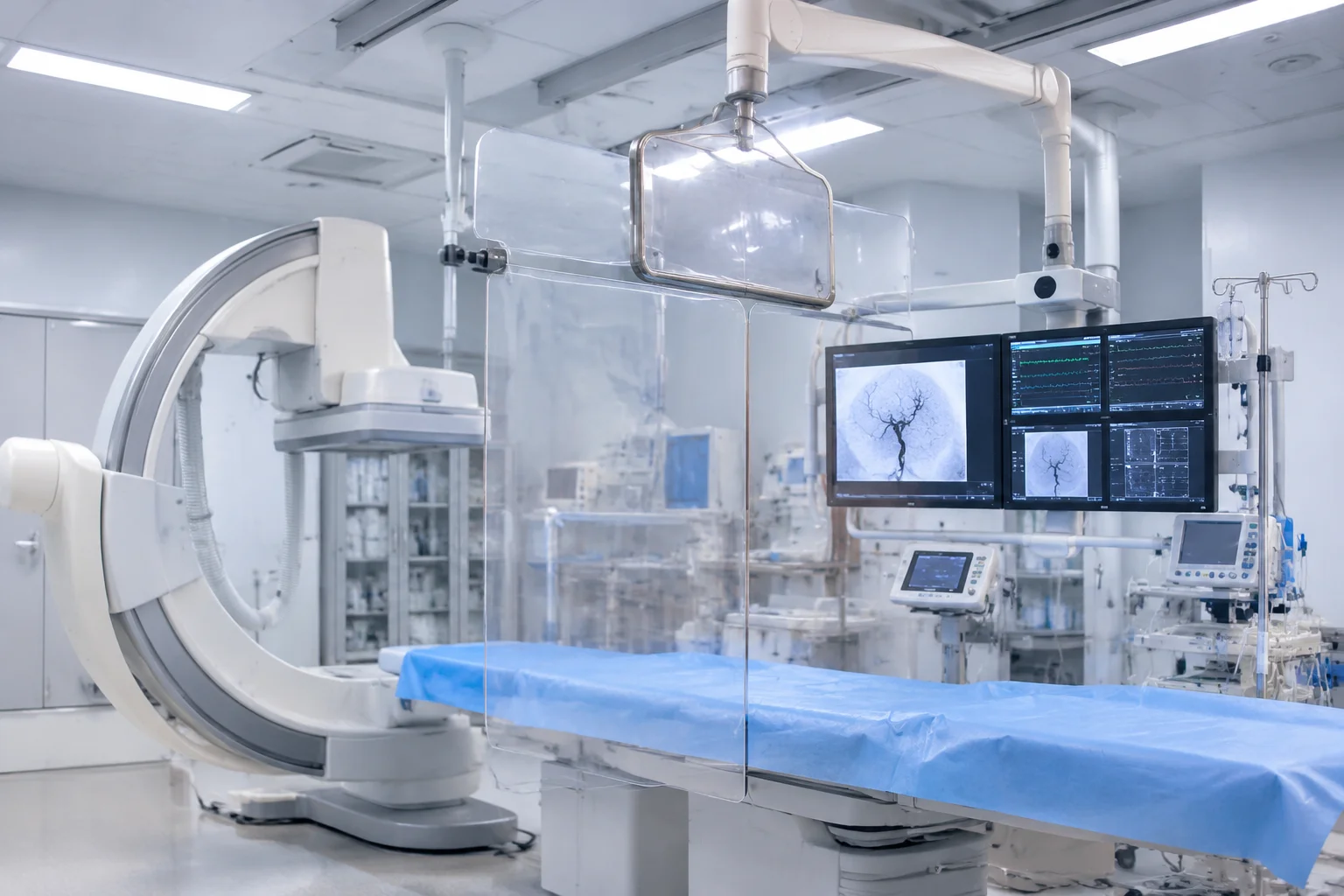
Interventional radiology suites operate under complex radiological conditions where prolonged fluoroscopy times and repeated cine-angiography runs expose clinical operators to significant primary and secondary scatter radiation. Because clinicians must remain in immediate proximity to the patient couch during micro-catheter navigation, vascular embolization, and biliary stenting, standard protective distances cannot be maintained. Secondary scatter emanating from the patient entry surface presents a persistent occupational hazard that requires layered, multi-point attenuation systems.
Managing exposure in these high-workload labs requires more than standard frontal aprons. Our interventional protection protocols combine wraparound lead-composite garments with articulated ceiling-suspended acrylic shields, contour-matched table skirts, and disposable bismuth pelvic drapes. Each shielding asset is tracked and maintained under strict radiometric surveillance to protect interventionists from cumulative ocular lens opacity, thyroid stress, and musculoskeletal fatigue caused by excessive garment weight.
No comments yet. Be the first to leave a comment.