Table of Contents
Structural Degradation Hazards from Incorrect Storage
Protective garments incorporate composite attenuation sheets composed of powdered lead, antimony, or bismuth suspended in vulcanized polymers. When personnel fold vests over chairs or leave them crumpled on tables, shearing stresses concentrate along the crease lines. These repetitive mechanical creases cause microscopic ruptures across the internal core matrix that remain invisible under standard outer nylon fabrics.
Secondary degradation stems from garment weight distribution. Standard wire or narrow plastic hangers collapse under heavy aprons, pinching shoulder material and accelerating seam tearing. Once core integrity fractures along the shoulder or waist seams, unattenuated scatter radiation streams directly toward clinicians during interventional cases.
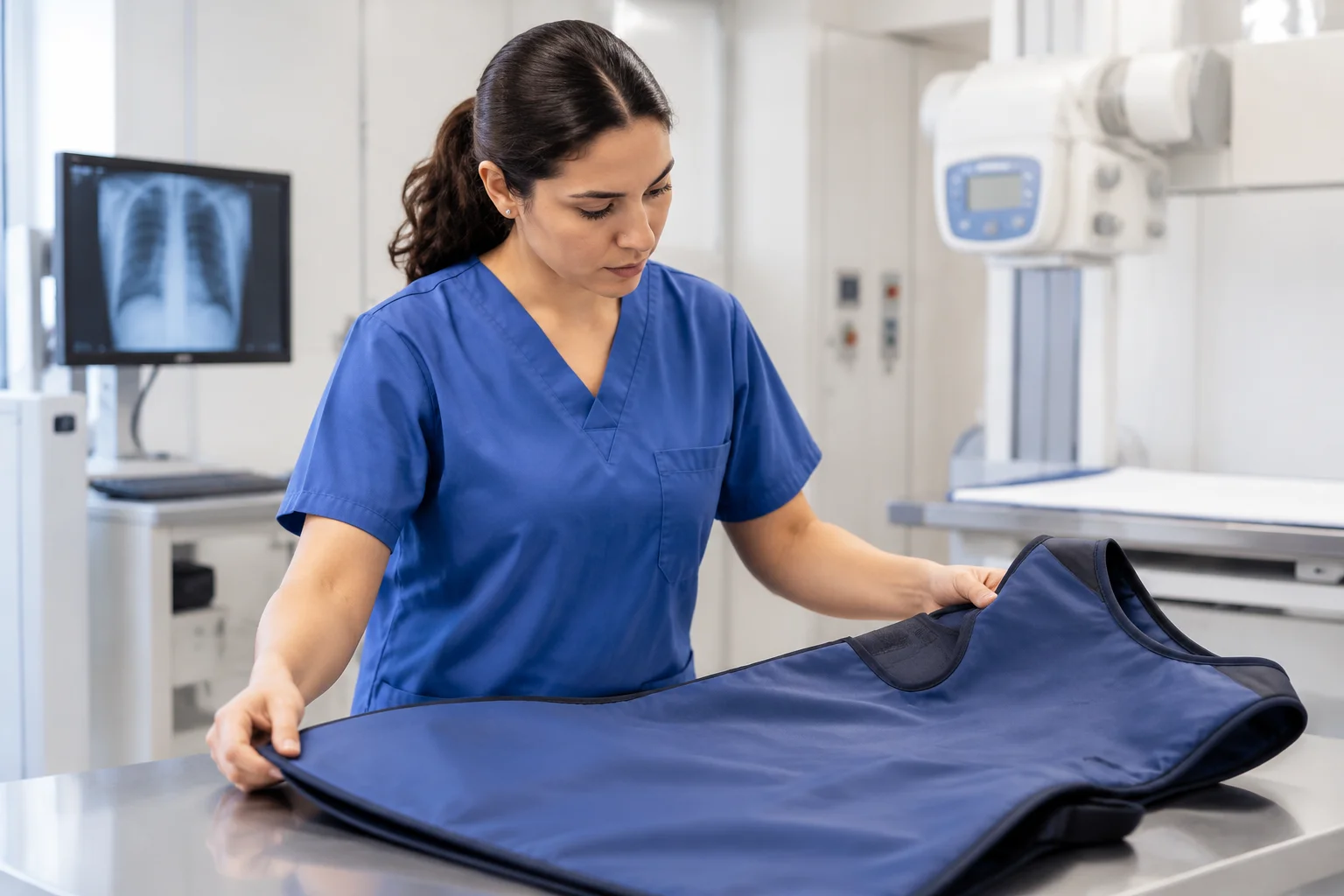
"Folding a radiation apron just once produces internal micro-cracks that compromise clinical shielding far faster than routine operational wear."
— Michael Chen, Senior Radiation Safety Officer
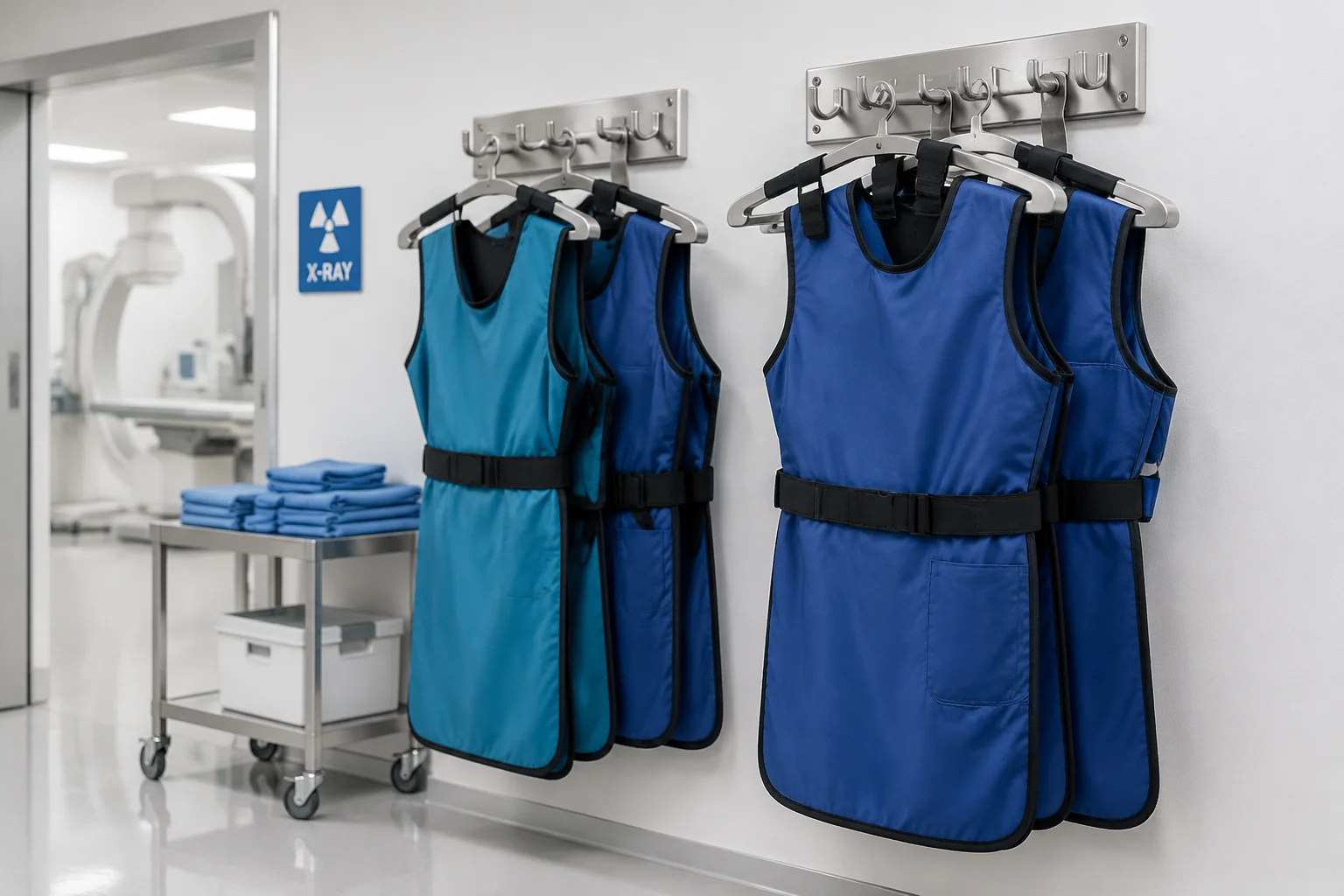
Mounting Architecture: Heavy-Duty Racks and Hangers
Clinical facilities must install dedicated storage systems built from heavy-gauge stainless steel or structural aluminum. Wall-mounted swing-arm brackets allow aprons to drape flat, preventing bunched fabric while maximizing airflow between garments. For two-piece systems, specialized tiered bars support the kilt without compressing internal waistband elements.
Mobile cart units offer adaptable placement across multi-room catheterization suites. Look for wide-shoulder hangers with continuous radiused edges that mirror human clavicular contours. Distributing garment weight across a broader surface prevents localized sagging and eliminates pressure-induced cracks at the neckline.
Environmental Climate Controls and Facility Guidelines
Polymer composite formulations remain sensitive to environmental thermal extremes. Garments placed near autoclave outlets, baseboard heaters, or sunny utility bays dry out rapidly, causing internal vinyl layers to embrittle. Maintain ambient storage rooms between 18°C and 24°C with controlled relative humidity between 30% and 50%.
- Fasten all hook-and-loop closures securely before hanging to prevent uneven bias stretching.
- Position dedicated thyroid shield clips along horizontal crossbars to eliminate elastic strap fatigue.
- Ensure garments dry completely on flat drying stands before re-racking following sanitization procedures.

[ FACTS ] KEY DEPARTMENT METRICS
- Target Ambient Temp
- 18°C – 24°C
- Relative Humidity
- 30% – 50% RH
- Max Racking Load
- 15 kg per arm
- Inspection Interval
- Every 12 Months
Audit Your Department Storage Layout
Schedule a facility assessment with our technical specialists to review heavy-duty rack loads, hanging ergonomics, and compliance documentation for all departmental shielding assets.
Schedule Safety Assessment
[ 04 ] VERIFIED CLINICAL DISCUSSION
No comments yet. Be the first to leave a comment.
Leave A Comment